
 +1-623-439-7197
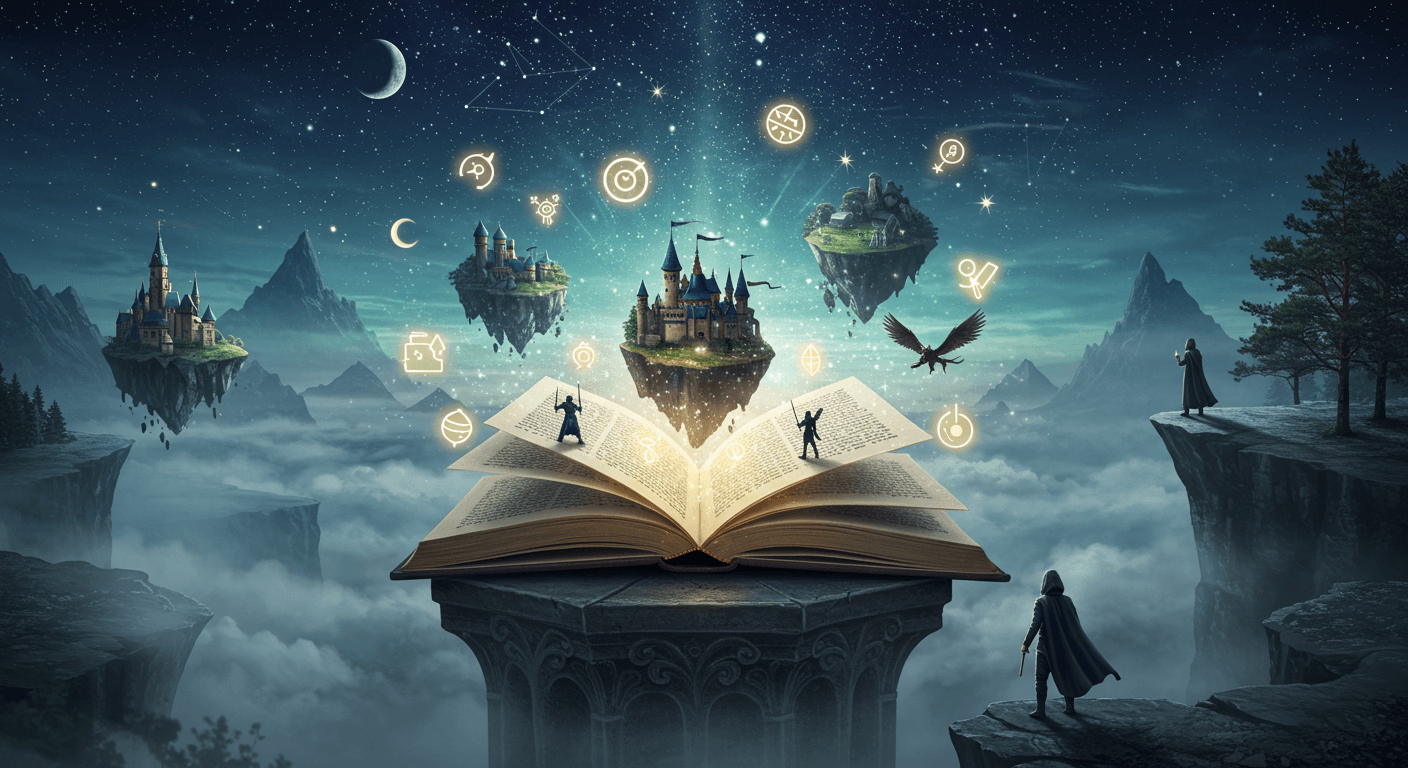
Writing a fantasy novel is like building a whole world from stardust and ink. You’re not just telling a story — you’re forging kingdoms, awakening ancient creatures, crafting magic systems, and breathing life into myths. Fantasy allows us to explore what-ifs that defy the ordinary, offering readers a chance to escape — or face truths through metaphor.
But behind every epic fantasy novel is careful architecture: believable characters, compelling plots, coherent worlds, and the discipline to see it through. Whether you’re writing high fantasy, dark fantasy, or something entirely your own, this guide offers fresh insights to help you write your fantasy novel — and finish it.
The First Spell: Why Fantasy?
Fantasy isn’t just dragons and elves — it’s about the extraordinary. It’s a genre that dares to reimagine the laws of reality. From Tolkien’s meticulous languages to N.K. Jemisin’s fractured earth magic, fantasy stretches boundaries.
So why do you want to write fantasy?
- Do you want to escape?
- Explore real-world issues in symbolic form?
- Build something completely original?
- Channel your childhood imagination into a new creation?
Clarity about your “why” becomes the compass that guides your story.
Worldbuilding Without Overbuilding
One of fantasy’s biggest draws is its immersive world — but also its biggest trap. It’s easy to get stuck in an endless loop of map drawing, name creation, and lore crafting. Here’s the key: worldbuilding must serve the story, not overshadow it.
Ask yourself:
- What needs to exist for your story to work?
- What cultural systems (religion, politics, class) drive the world’s tension?
- How do people survive, love, fight, or trade in this realm?
Instead of dumping exposition in the first chapter, show the world through action. Let readers discover it organically. A peasant cursing the crown tells you more about the ruling system than a prologue ever could.
Characters Over Kingdoms
Readers may stay for your magic system, but they fall in love with your characters. Fantasy demands larger-than-life stakes, but it’s the people (or creatures) in those stakes who carry the weight.
Here’s how to build characters that matter:
- Give them something to fight for — and something to lose.
- Let them wrestle with inner conflicts as well as outer threats.
- Make even your villains human (or at least understandable).
Instead of designing your hero around the plot, design the plot around your hero’s choices. Who they are should shape what happens next — not the other way around?
Plotting the Impossible (Without Getting Lost in the Fog)
Fantasy plots often feel massive. Wars, prophecies, hidden lineages. But complexity is no substitute for clarity. A strong fantasy novel still follows the principles of good storytelling: a protagonist with a goal, obstacles in the way, and meaningful consequences.
Use this simple structure as a skeleton:
- Status Quo – Show the ordinary world, even if it’s magical.
- Disruption – Something threatens the balance.
- Quest Begins – A goal is formed or forced.
- Crisis Point – Your hero must choose between values or fates.
- Climax – Epic confrontation or revelation.
- Aftermath – What has changed?
From there, you can weave in subplots, prophecies, betrayals, and unexpected alliances. But keep your eye on the spine of the story — the emotional arc.
Magic Systems That Matter
Magic needs limits. A system without boundaries becomes a cheat code, not a narrative device.
There are two types:
- Hard magic (like Brandon Sanderson’s): Readers understand the rules.
- Soft magic (like Tolkien’s): Mysterious and symbolic, with unknown limits.
Ask these questions when designing your system:
- Where does magic come from?
- Who controls it?
- What does it cost to use?
- How is it learned, passed on, or corrupted?
Great fantasy uses magic not just as spectacle — but as metaphor. Think of the bending in Avatar: The Last Airbender representing philosophy and personality, or the One Ring as a symbol of power and corruption.
Table: Elements That Make a Fantasy Novel Work
|
Tropes vs. Clichés: Use, Subvert, or Avoid?
Fantasy has its iconic tropes — the Chosen One, the Dark Lord, the Lost Heir. The key is what you do with them.
- Use them if you can bring a fresh spin.
- Subvert them to surprise readers (what if the chosen one refuses the call?).
- Avoid them if they add nothing new.
Good fantasy nods to tradition but refuses to be trapped by it.
Dialogue That Doesn’t Sound Like a Shakespearean Play
A common fantasy trap: over-stylized dialogue. Yes, your world may be ancient, but that doesn’t mean characters need to sound like 15th-century knights at all times.
Make your dialogue serve:
- Character dynamics
- Plot progression
- Emotional weight
And don’t be afraid to use contractions or modern phrasing — especially for pacing. Your reader should feel immersed, not slowed down by a wall of thee’s and thou’s.
Writing Tools for Fantasy Authors
There’s no one-size-fits-all toolkit, but here are some of the most useful tools for fantasy writers:
For Worldbuilding:
- World Anvil – A robust platform to store your lore, maps, and timelines.
- Campfire – Organize characters, cultures, religions, and more.
For Writing & Drafting:
- Scrivener – Fantastic for multi-POV stories and organizing chapters.
- Google Docs – Easy for collaboration and accessibility.
For Naming:
- Fantasy Name Generators – Thousands of ideas for places, creatures, and people.
- Behind the Name – Great for linguistic authenticity.
For Maps:
- Inkarnate – Easy-to-use fantasy map creator with pro features.
- Wonderdraft – A downloadable tool for detailed, beautiful maps.
But the most important tool? Your imagination — paired with consistency.
Revision: Where the Magic Happens
The first draft is you telling yourself the story. The second — and third, and fourth — is where you polish it into something magical.
When editing a fantasy novel, focus on:
- Continuity: Did you break your own magical rules?
- Pacing: Do scenes drag or rush?
- Clarity: Are readers lost in names and lore dumps?
- Character Arcs: Did your hero grow? Did their journey matter?
Have beta readers give feedback — especially on world comprehension and character believability. You’re too close to the story to spot every gap.
Publishing Your Fantasy Novel
You’ve written the book — now what?
You can go the traditional route, querying agents and publishers, especially those open to speculative fiction. Or you can self-publish, which offers more control over your cover, release date, and royalty rate.
Either way:
- Invest in professional editing.
- Get a strong, genre-appropriate cover.
- Build a marketing plan (especially important for self-published books).
Consider platforms like Wattpad or Royal Road if you want to build an audience before launching.
Inspiration From the Greats
Still stuck? Read widely.
- N.K. Jemisin – Complex worlds and social themes
- Leigh Bardugo – Rich characters and plot twists
- Ursula K. Le Guin – Literary depth in speculative spaces
- Terry Pratchett – Humor, heart, and satire
Let their worlds feed yours — not by copying, but by understanding why their work resonates.
Final Word: Writing Fantasy Is Risky — And That’s Why It Matters
Fantasy writers do what few others dare: create from nothing. That takes guts. It also takes time. But there’s nothing more satisfying than seeing your characters make impossible choices in worlds you’ve built from scratch.
So, keep writing. Build flawed heroes. Tear down kingdoms. Break your magic and rebuild it stronger. Make your story the kind that stays with someone long after the last page — not because of the dragons, but because it made them feel something.
Because that’s what fantasy is: truth wearing the mask of myth.


